
Understand London’s zone system and what it means for renters. Compare living costs, commute times, space, and lifestyle across Zones 1-6. Complete guide to choosing the right zone for your London rental.
Introduction
London’s zone system fundamentally shapes where and how people live, yet many renters, particularly those new to the capital, misunderstand what zones actually mean beyond transport fares. While Zones 1-6 originated as Transport for London’s fare structure, these geographic rings have evolved to represent distinct lifestyle patterns, rent costs, property types, and community characters.
This comprehensive guide explains the practical reality of living in each zone: what you can afford, how long your commute takes, what your neighborhood looks like, and crucially, which lifestyle trade-offs each zone requires. Whether you’re a student on a tight budget, young professional prioritizing nightlife access, or family seeking space and schools, understanding zones helps you focus your search on areas matching your priorities.
By examining rent differentials, transport connectivity, local amenities, and resident demographics across all six zones, you’ll understand how geography shapes daily London life, and make informed decisions about where to rent.
Understanding the Zone System
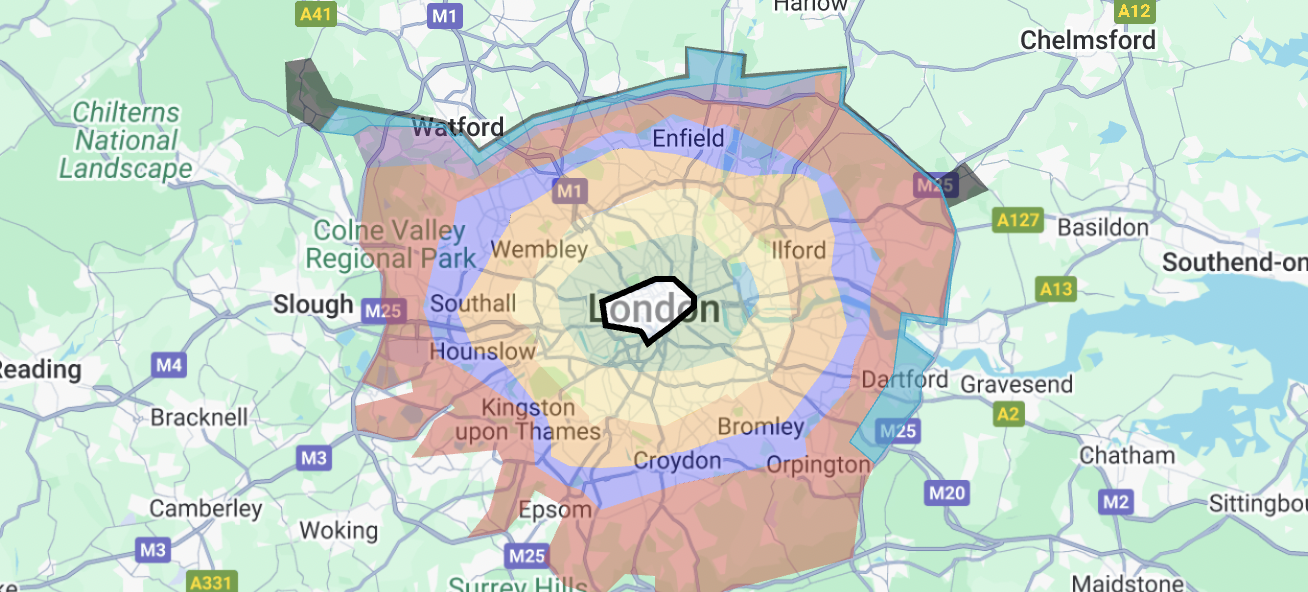
Transport for London created zones in 1981 to simplify fare calculation across London’s expanding transport network. According to TfL zone maps, zones form concentric rings:
Zone 1: Central London (Westminster, City, West End, South Bank) Zone 2: Inner suburbs (Camden, Clapham, Shoreditch, Greenwich) Zone 3: Inner suburbs (Wimbledon, East Ham, Walthamstow, Brixton) Zone 4: Outer suburbs (Wembley, Chiswick, Eltham, Romford) Zone 5: Far suburbs (Edgware, Croydon, Romford, Twickenham) Zone 6: Outer reaches (Heathrow, Upminster, Chelsfield)
However, zones don’t form perfect circles, they follow historical borough boundaries and transport infrastructure, creating irregular shapes. Some areas sit on zone boundaries (e.g., stations serving both Zones 2/3), affecting fare costs.
What Zones Don’t Tell You
According to Greater London Authority area classifications, zones correlate imperfectly with:
- Affluence: Some Zone 3-4 areas (Richmond, parts of Ealing) are wealthier than Zone 1-2 areas
- Safety: Crime rates vary within zones as much as between them
- Character: Each zone contains diverse neighborhoods with distinct identities
- Desirability: “Better” zones depend entirely on individual priorities
Zones provide useful shorthand for distance from central London and rough rent expectations, but shouldn’t determine your search alone. Neighborhood character matters more than zone number.
Zone 1: Central London Living
Geographic Scope
Zone 1 encompasses London’s historic core: Westminster, City of London, West End, Holborn, King’s Cross, Southwark, and Waterloo areas. According to City of London Corporation boundaries, this represents approximately 2% of Greater London’s area but contains most major employment, tourist attractions, and cultural venues.
Rent Expectations
According to ONS private rental statistics, Zone 1 commands London’s highest rents:
One-bedroom flat: £2,000-£3,500 monthly Two-bedroom flat: £2,800-£5,000+ monthly Room in shared house: £800-£1,500 monthly
These figures represent typical ranges; specific neighborhoods (Mayfair, Belgravia, Knightsbridge) exceed even these premiums. According to Rightmove rental data, Zone 1 rents have remained consistently 60-100% above outer zones.
What You Get
Property types: Predominantly purpose-built flats, mansion conversions, and new developments. Victorian terraces rare in central areas. According to English Housing Survey data, average Zone 1 property size is 25-30% smaller than Zone 4-5 equivalents at similar prices.
Space: Expect compact living. One-bedroom flats typically 400-600 sq ft. Storage limited. Outside space (balconies, gardens) commands significant premiums.
Building type: Mix of older mansion blocks, 1960s-80s developments, and modern high-rises. Portered buildings common in premium developments.
Lifestyle and Amenities
Advantages:
- Walking distance to major employment (City, West End)
- Immediate access to culture (museums, theaters, galleries)
- 24-hour transport (Night Tube, buses)
- Extensive dining, shopping, entertainment
- Iconic London living experience
Challenges:
- Extremely expensive for space received
- Tourist crowds in many neighborhoods
- Limited residential community feel
- Noise from nightlife and traffic
- Fewer supermarkets, more expensive local shopping
- Minimal green space (except near parks)
According to Westminster Council residential data, Zone 1 demographics skew toward high-earning professionals, international residents, and students in purpose-built accommodation. Few families due to space constraints and costs.
Transport
Travel times to central locations: 5-15 minutes to most major stations
Annual transport costs: Zone 1 Travelcard: £1,392 (needed only for outer London travel)
Connectivity: Excellent tube/bus coverage. According to TfL network data, Zone 1 has highest station density and service frequency. However, some inner areas have limited station access despite central location.
Who Lives Here
According to ONS area classifications, typical Zone 1 renters include:
- Finance/legal professionals prioritizing minimal commute
- Corporate executives with employer housing allowances
- International workers on temporary assignment
- Students in university halls/purpose-built accommodation
- Wealthy individuals prioritizing location over space
Real resident experience: RoomReview Zone 1 listings reveal that residents often question value-for-money despite convenient location, with many moving to Zone 2-3 within 1-2 years for better space.
Zone 2: Inner Suburban Living
Geographic Scope
Zone 2 forms the ring around central London, encompassing established neighborhoods including Camden, Islington, Hackney, Tower Hamlets, Southwark, Lambeth, and parts of Westminster, Kensington & Chelsea, Hammersmith & Fulham. According to Greater London Authority demographics, Zone 2 contains London’s highest residential density.
Rent Expectations
Zone 2 offers marginally better value than Zone 1 while maintaining excellent connectivity:
One-bedroom flat: £1,400-£2,200 monthly Two-bedroom flat: £1,800-£3,200 monthly Room in shared house: £650-£1,100 monthly
Variation within Zone 2 is substantial: affluent areas (Notting Hill, Primrose Hill, parts of Greenwich) command premiums, while other neighborhoods (parts of Tower Hamlets, Southwark) offer better value.
What You Get
Property types: Victorian/Edwardian terraces and conversions dominate, supplemented by inter-war blocks and modern developments. According to Historic England area data, Zone 2 contains London’s highest concentration of Victorian housing stock.
Space: One-bedroom flats typically 500-700 sq ft—modest improvement over Zone 1. Garden flats and small outside spaces more common than central London.
Building type: Mix of converted houses (often 4-6 flats), purpose-built Victorian mansion blocks, and modern apartment developments. Character properties abundant.
Lifestyle and Amenities
Advantages:
- 15-25 minute commute to central London
- Established high streets with independent shops
- Strong neighborhood identities and communities
- Better balance of space and location than Zone 1
- Access to parks and green spaces
- Thriving cultural scenes (music venues, theaters, galleries)
Challenges:
- Still expensive, particularly in trendy neighborhoods
- Competition for properties fierce
- Some areas have significant gentrification tensions
- Parking difficult and expensive
- Noise from busy streets and nightlife
Zone 2 demographics vary dramatically by neighborhood. According to Camden Council and Hackney Council area profiles, areas range from wealthy professionals (Primrose Hill) to young creative types (Shoreditch) to diverse family communities (parts of Lambeth).
Transport
Travel times to central locations: 15-25 minutes to major stations
Annual transport costs: Zone 1-2 Travelcard: £1,608
Connectivity: Excellent. Multiple tube lines, overground services, and extensive bus networks. According to TfL service frequency data, Zone 2 stations maintain 2-5 minute peak service frequencies. Night services available on major routes.
Who Lives Here
Typical Zone 2 renters according to London Datastore demographics:
- Young professionals (25-40) in established careers
- Creative industry workers
- Students in private accommodation (universities with central campuses)
- Small families starting out
- International professionals
Most popular Zone 2 areas for renters:
According to SpareRoom demand data, most-searched Zone 2 neighborhoods include:
- Clapham: Young professional hub, extensive nightlife, Northern Line
- Shoreditch: Creative scene, tech workers, central location
- Brixton: Diverse community, music venues, improving transport
- Camden: Student/tourist area, alternative culture, Northern Line
- Greenwich: Riverside, more family-oriented, DLR/Jubilee
Zone 2 Variations: West vs. East vs. North vs. South
West Zone 2 (Kensington, Fulham, Hammersmith): Generally more expensive, affluent, quieter residential character. Good schools attract families.
East Zone 2 (Shoreditch, Bethnal Green, Stratford): Younger demographic, more affordable, rapidly gentrifying, creative scene.
North Zone 2 (Camden, Islington, Kentish Town): Established “cool” areas, strong housing demand, excellent transport, mixed demographics.
South Zone 2 (Clapham, Brixton, Peckham): Traditionally more affordable than north, increasingly popular with young professionals, improving amenities.
Zone 3: Balance Zone
Geographic Scope
Zone 3 encompasses established suburbs including Wimbledon, Balham, Walthamstow, Leyton, East Ham, New Cross, and parts of outer boroughs. According to Transport for London zone maps, Zone 3 forms the broadest ring geographically.
Rent Expectations
Zone 3 provides the first significant rent savings while maintaining reasonable commutes. According to ONS rental statistics:
One-bedroom flat: £1,200-£1,700 monthly Two-bedroom flat: £1,500-£2,300 monthly Room in shared house: £500-£850 monthly
These savings—approximately 20-30% compared to Zone 2—make Zone 3 increasingly popular with renters priced out of inner zones.
What You Get
Property types: Victorian/Edwardian terraces dominate, with inter-war semi-detached houses and 1960s-80s estates. According to English Housing Survey, Zone 3 offers best space-to-rent ratio in inner London.
Space: One-bedroom flats typically 600-750 sq ft. Gardens more common, particularly for ground-floor flats and houses. Two-bedroom houses with gardens available at prices Zone 2 commands for flats.
Building type: Mix of converted Victorian houses, purpose-built inter-war blocks, and modern developments. More houses available for rent than inner zones.
Lifestyle and Amenities
Advantages:
- Noticeably better value for space
- 25-35 minute commutes to central London
- Established high streets with affordable shopping
- Gardens and outside space more accessible
- Less dense, quieter than inner zones
- Stronger residential community character
- Good local schools (appeals to families)
Challenges:
- Fewer cultural venues than inner zones
- Limited nightlife (must travel for evening entertainment)
- Local amenities sometimes more basic
- Transport connectivity variable by area
- Some neighborhoods retain poor historical reputations
Demographics in Zone 3 lean family-oriented and established according to GLA population data. Mix of long-term residents, families, and young professionals seeking space.
Transport
Travel times to central locations: 25-40 minutes depending on specific location
Annual transport costs: Zone 1-3 Travelcard: £1,848
Connectivity: Generally good but more variable than inner zones. Some areas have excellent links (Jubilee Line through Zone 3 East, Northern Line to Zone 3 South), others depend on slower routes. According to TfL journey planning, evening service frequencies drop noticeably compared to Zones 1-2.
Who Lives Here
Typical Zone 3 renters:
- Families with school-age children
- Professionals in 30s-40s prioritizing space
- Couples saving for house purchase
- Those priced out of Zone 2 but wanting inner London access
- Students from outer-campus universities
Popular Zone 3 areas for renters:
- Wimbledon: Affluent, excellent schools, District Line/National Rail
- Walthamstow: Up-and-coming, Victoria Line, affordable
- Balham: Northern Line extension of Clapham, young professionals
- Greenwich: Riverside, historic character, DLR/Elizabeth Line access
- Ealing: West London hub, Central/District/Elizabeth lines, family-friendly
Zone 4: Suburban Value
Geographic Scope
Zone 4 encompasses outer suburbs including Wembley, parts of Croydon, Chiswick, Morden, parts of Ilford, and Eltham. According to Transport for London boundaries, Zone 4 marks transition from inner to outer London character.
Rent Expectations
Zone 4 offers substantial savings compared to inner zones. According to Rightmove rental data:
One-bedroom flat: £1,000-£1,400 monthly Two-bedroom flat: £1,200-£1,800 monthly Two-bedroom house: £1,400-£2,000 monthly Room in shared house: £400-£650 monthly
These represent 40-50% savings compared to Zone 2, though commute costs and times increase.
What You Get
Property types: Inter-war semi-detached houses dominate, along with post-war estates and modern developments. Victorian stock decreases compared to inner zones. According to English Housing Survey, Zone 4 offers highest proportion of houses vs. flats.
Space: One-bedroom flats 650-800+ sq ft. Two-bedroom houses with gardens widely available. Significantly more space for money than any inner zone.
Building type: Predominantly residential houses and low-rise blocks. High-rise estates less common than Zone 3. Gardens standard for houses.
Lifestyle and Amenities
Advantages:
- Excellent space for money
- Gardens and outside space standard
- Quiet, suburban environment
- Good schools (attracts families)
- Local parks and green space
- Parking often available
- Lower population density
- Strong community feel in established areas
Challenges:
- 40-60 minute commutes to central London
- Limited local nightlife and culture
- Must travel for entertainment/shopping beyond basics
- Some areas feel disconnected from “London”
- Public transport less frequent than inner zones
- Higher transport costs (Zone 1-4 fares)
Demographics skew heavily toward families, older residents, and those prioritizing space over location. According to ONS area classifications, Zone 4 has London’s highest proportion of owner-occupiers, though substantial private rental sector exists.
Transport
Travel times to central locations: 40-60 minutes depending on location
Annual transport costs: Zone 1-5 Travelcard: £2,408 (most Zone 4 areas require Zone 1-5)
Connectivity: Variable. Some areas have excellent links (Elizabeth Line to Zone 4 West), others rely on slower trains or buses. According to TfL service patterns, peak service good but evening/weekend frequency drops significantly.
Who Lives Here
Typical Zone 4 renters:
- Families needing space and gardens
- First-time buyers renting while saving deposits
- Professionals comfortable with longer commutes
- Retirees and older demographics
- Those prioritizing affordability and space
Popular Zone 4 areas for renters:
- Acton/Ealing (Zone 3/4 boundary): Elizabeth Line transformed connectivity, good value
- Wembley: Improved by stadium regeneration, Jubilee/Metropolitan lines
- Croydon: Major South London hub, trams/trains, substantial regeneration
- Richmond (Zone 4): Premium suburb despite zone, park access, strong schools
- Chiswick: Affluent West London, District Line/Overground, village character
Zone 5: Outer Suburbs
Geographic Scope
Zone 5 represents outer London suburbs including Barking, parts of Enfield, Sutton, outer Croydon, Harrow, and Twickenham. According to Greater London Authority boundaries, Zone 5 abuts non-London areas in many places.
Rent Expectations
Zone 5 provides London’s best value outside Zone 6. According to ONS housing data:
One-bedroom flat: £900-£1,200 monthly Two-bedroom flat: £1,000-£1,400 monthly Two-bedroom house: £1,200-£1,700 monthly Three-bedroom house: £1,400-£2,000 monthly Room in shared house: £350-£550 monthly
These represent 50-60% savings vs. Zone 2, though transport costs erode some savings.
What You Get
Property types: Post-war and modern developments dominate. Semi-detached and detached houses common. According to English Housing Survey, Zone 5 has highest average property sizes.
Space: Substantially more than inner zones. Two-bedroom flats 750-900 sq ft. Three-bedroom houses with gardens standard. Driveways and garages common.
Building type: Residential houses predominate. Purpose-built low-rise flat developments in town centers. Gardens, parking, and outside space abundant.
Lifestyle and Amenities
Advantages:
- Maximum space for money in London
- Quiet, residential environment
- Gardens, parking, storage standard
- Good schools attract families
- Green space and parks abundant
- Strong local communities
- Affordable local shopping
- Feels like “leaving London” without actually leaving
Challenges:
- 50-70+ minute commutes to central London
- Very limited cultural venues
- Nightlife minimal (local pubs mainly)
- Must travel for most entertainment
- Can feel isolated from London’s energy
- Transport costs significant (£2,400+ annually)
- Public transport frequencies drop sharply evenings/weekends
Demographics strongly family-oriented. According to London Datastore population data, Zone 5 has lowest proportion of 20-30 year olds and highest proportion of families with children.
Transport
Travel times to central locations: 50-70+ minutes
Annual transport costs: Zone 1-5 or 1-6 Travelcard: £2,408-£2,664
Connectivity: Dependent on main rail lines. Some areas well-connected (Elizabeth Line to Zone 5 West, some National Rail lines), others rely on slower services. According to TfL journey planning, most journeys require 50+ minutes.
Who Lives Here
Typical Zone 5 renters:
- Families with multiple children
- Retirees and older people
- Those working locally (not commuting to central London)
- People prioritizing space over location
- Those unable to afford property purchase in inner zones
Popular Zone 5 areas for renters:
- Sutton: Affordable, good schools, Southern/Thameslink rail
- Barking: Very affordable, Elizabeth Line revolutionized connectivity
- Croydon suburbs: Mix of areas, trams and trains, regenerating
- Enfield: North London value, Piccadilly Line access
- Harrow: Established suburb, Metropolitan Line, diverse community
Zone 6: London’s Edge
Geographic Scope
Zone 6 represents London’s periphery: Heathrow Airport, Upminster, parts of Bexley, outer Croydon, and other edge areas. According to Transport for London zone 6 boundaries, many Zone 6 areas border non-London counties.
Rent Expectations
Zone 6 offers London’s lowest rents, though costs approach non-London areas in some locations. According to ONS rental data:
One-bedroom flat: £800-£1,100 monthly Two-bedroom house: £1,000-£1,500 monthly Three-bedroom house: £1,200-£1,800 monthly Room in shared house: £300-£500 monthly
For comparable rents, neighboring counties (Essex, Kent, Hertfordshire) sometimes offer similar or better options with equivalent commute times.
What You Get
Property types: Modern estates and post-war developments. Some Victorian/Edwardian stock remains in older town centers. Houses dominate over flats.
Space: Maximum space in London. Three-bedroom houses with large gardens standard. Four-bedroom houses accessible at prices buying modest flats in Zone 2.
Building type: Predominantly detached and semi-detached houses. Low-rise developments around transport hubs.
Lifestyle and Amenities
Advantages:
- Maximum space in Greater London
- Quiet, genuinely suburban/semi-rural character
- Large gardens, driveways, garages standard
- Good schools with lower competition
- Very affordable local living costs
- Strong local communities
- Green space abundant
- Can own cars practically
Challenges:
- 60-90+ minute commutes to central London
- Essentially no cultural venues
- Limited nightlife (local pubs/restaurants only)
- Can feel completely disconnected from London
- Public transport limited evenings/weekends
- Higher transport costs may offset rent savings
- Some areas have limited employment locally
Demographics heavily skew toward families and older residents. According to London Datastore, Zone 6 has London’s oldest average population and lowest density.
Transport
Travel times to central locations: 60-90+ minutes
Annual transport costs: Zone 1-6 Travelcard: £2,664
Connectivity: Highly variable. Some areas have reasonable links (Elizabeth Line to Heathrow, some rail lines), others rely on slow trains with changes. According to National Rail journey planning, many Zone 6 journeys exceed 60 minutes.
Who Lives Here
Typical Zone 6 renters:
- Families needing maximum space
- Retirees
- Those working locally or outside London
- People for whom commute time matters less
- Those renting while saving for property purchase
Zone 6 is largely owner-occupied; rental market smaller than inner zones according to ONS tenure data.
Comparing Zones: The Reality of Trade-offs
Total Living Costs by Zone
While rent decreases moving outward, other costs change the calculation. Based on Which? cost of living data and TfL fare information:
Zone 1 or 2:
- Rent (1-bed): £1,700 monthly average
- Transport: £134 monthly (Zone 1-2 Travelcard)
- Total: £1,834 monthly
- Commute time: 15-25 minutes
Zone 4:
- Rent (1-bed): £1,200 monthly average
- Transport: £200 monthly (Zone 1-5 Travelcard)
- Total: £1,400 monthly
- Commute time: 40-60 minutes
Savings: £434 monthly but 50-70 extra commuting minutes daily
According to Save the Student cost analysis, whether outer zones offer “better value” depends on valuing your commuting time:
- 50 extra minutes daily = 20+ hours monthly commuting
- £434 savings ÷ 20 hours = £21.70/hour saved
- If your time is worth more than £22/hour, Zone 2 may offer better value
- If space and money matter most, outer zones win
Space Comparison Across Zones
For approximately £1,500 monthly rent, expect:
- Zone 1: Studio or small 1-bed flat, 350-450 sq ft
- Zone 2: 1-bed flat, 500-600 sq ft
- Zone 3: Large 1-bed or small 2-bed flat, 650-750 sq ft
- Zone 4: 2-bed flat or small house, 750-900 sq ft
- Zone 5: 2-bed house with garden, 900-1100 sq ft
- Zone 6: 3-bed house with garden, 1000-1300 sq ft
Space differences are dramatic—roughly doubling for each zone moved outward at equivalent prices.
Lifestyle Comparison
| Factor | Zone 1-2 | Zone 3-4 | Zone 5-6 |
|---|---|---|---|
| Commute time | 15-30 min | 30-50 min | 50-90+ min |
| Cultural access | Immediate | Travel required | Significant travel |
| Nightlife | Extensive | Moderate | Minimal |
| Green space | Parks only | Better access | Abundant |
| Community feel | Limited | Moderate | Strong |
| Space for money | Poor | Fair | Excellent |
| Family-friendly | Limited | Moderate | Very good |
| Transport frequency | Excellent | Good | Variable |
Choosing Your Ideal Zone
For Students
Best choices: Zone 2-3 near university campuses
- Balance affordability and access
- Student communities concentrated here
- Transport to multiple campuses feasible
- Nightlife and social activities accessible
According to NUS student living research, most students live Zone 2-3 from second year onward.
For Young Professionals (20s-30s, single/couples)
Best choices: Zone 2-3
- Reasonable commutes (25-40 minutes)
- Active social scenes
- Balance of space and location
- Strong young professional communities
SpareRoom demand data confirms Zone 2-3 attracts highest competition from 25-40 demographic.
For Families with Children
Best choices: Zone 3-5 depending on budget
- Space for children (gardens, multiple bedrooms)
- Good schools more accessible
- Quieter, safer environments
- Community support networks
- Parking for family vehicles
According to GLA family demographics, families concentrate in Zone 3-5 where space meets affordability.
For Remote/Hybrid Workers
Best choices: Zone 3-5
- Space for home offices
- Reduced commute frequency justifies longer occasional journeys
- Better quality of life when working from home
- Significant cost savings vs. Zone 1-2
Office for National Statistics home working data shows hybrid workers increasingly choosing outer zones for space.
For Those Prioritizing Nightlife/Culture
Best choices: Zone 1-2
- Immediate access to venues
- Late-night transport
- Vibrant social scenes
- Worth premium if lifestyle priority
According to Time Out London entertainment data, 85%+ of cultural venues locate in Zone 1-2.
Conclusion
London’s zone system provides useful framework for understanding geographic trade-offs, but zones alone shouldn’t determine your housing search. Each zone contains diverse neighborhoods with distinct characters—Zone 2 Peckham differs dramatically from Zone 2 Notting Hill despite sharing a zone number.
The “right” zone depends entirely on your priorities: commute tolerance, space requirements, budget constraints, lifestyle preferences, and life stage. Many Londoners move between zones as circumstances change—starting Zone 2 as young professionals, moving Zone 4-5 when starting families, perhaps returning inner zones when children leave home.
Understanding what each zone realistically offers—and crucially, what it costs in money, time, and lifestyle—helps you make informed choices matching your actual needs rather than assumptions about where you “should” live.
The most valuable insights come from residents experiencing these zones daily. Their perspectives on commute reality, neighborhood character, local amenities, and value-for-money help you understand what statistics alone cannot capture.
Share your zone experience: Whether you love Zone 2’s energy or found unexpected value in Zone 4, your experience helps others understand London’s geography. Share your neighborhood review on RoomReview to help renters make informed zone choices.
Explore London postcodes on RoomReview to read resident experiences across all zones, compare specific neighborhoods, and contribute your insights about living in different parts of London.